Iron and ferritin for female runners: the test nobody orders
Low iron feels exactly like being unfit — heavy legs, high heart rate, no top end. It is common in female runners, it is a simple blood test, and it is routinely missed.
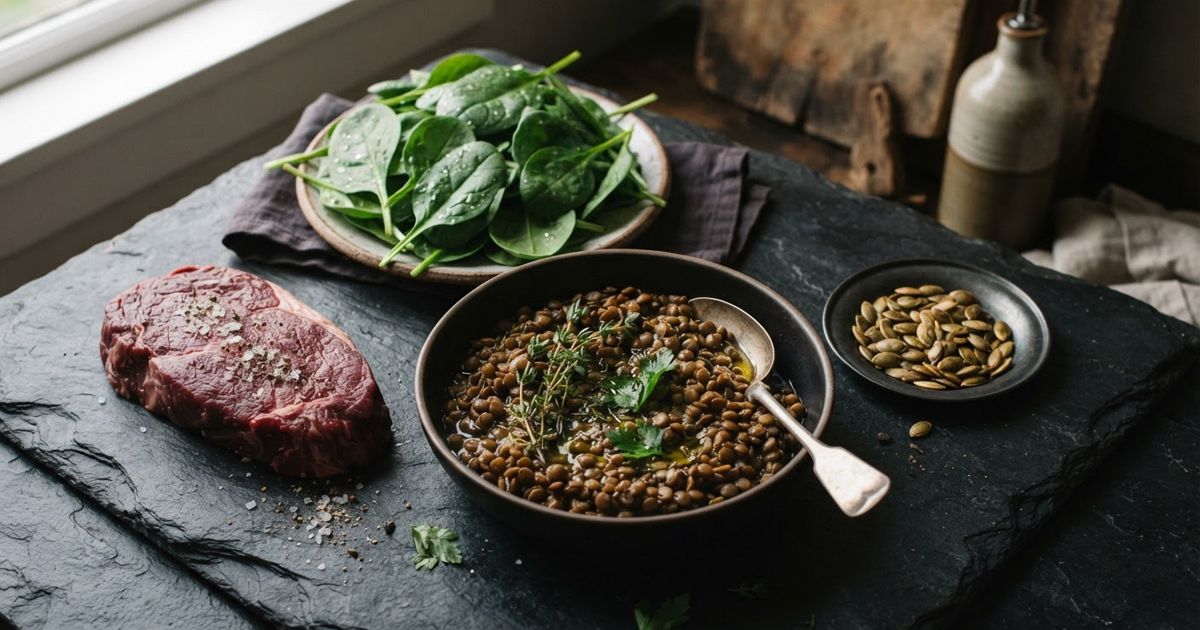
Table of contents
If you have been training consistently and everything has felt inexplicably heavy for weeks, iron is worth ruling out before you conclude you need to train harder or rest more.
This is a medical topic and this page is not a diagnosis. The point of it is to know what to ask for.
Why runners, and why women especially
Several things stack up:
- Menstrual losses. The largest factor, and it scales with how heavy your periods are.
- Foot-strike haemolysis. Repeated impact destroys a small number of red blood cells with each step. The effect per run is tiny; over months of mileage it is not nothing.
- Sweat and gut losses, both small.
- Hepcidin. Hard exercise transiently raises this hormone, which reduces iron absorption for some hours afterwards — meaning the window right after a hard session is a poor time to take an iron supplement.
Put together, women who run are one of the groups where deficiency is genuinely common.
Ferritin versus haemoglobin
This matters, because it is where testing usually goes wrong.
Haemoglobin tells you whether you are anaemic — whether your blood is already short of oxygen-carrying capacity. Ferritin measures your stored iron, and it falls first.
You can have entirely normal haemoglobin, be told your blood test is fine, and still have depleted stores that are affecting how you feel and train. If you are asking for a test, ask for ferritin specifically, not just a full blood count.
Reference ranges vary by lab, and what counts as adequate for an endurance athlete is debated and generally higher than the bottom of a standard range. That is a conversation to have with a doctor rather than an internet threshold to self-apply.
What it feels like
Frustratingly non-specific, which is why it hides:
- Legs that feel heavy on easy runs, not just hard ones
- Higher heart rate at paces that used to be comfortable
- No top end — you can jog but there is nothing there when you push
- Ordinary tiredness, poor recovery, sometimes breathlessness on stairs
The pattern that should raise suspicion is weeks of this without an obvious cause, especially alongside heavy periods.
Do not just start supplementing
Two reasons. First, iron overload is a real condition and unnecessary supplementation is not harmless. Second, if you supplement blindly and feel better, you never find out whether something else was going on.
Get tested first. If you are deficient, a doctor can advise on dose and form — and absorption details matter more than people expect: vitamin C helps, tea, coffee and calcium at the same time hinder, and the hours after a hard session are a poor window.
Food first, where it is enough
Red meat is the most bioavailable source. Plant sources — lentils, beans, tofu, dark leafy greens, fortified cereals — are absorbed less efficiently, and pairing them with vitamin C meaningfully improves that.
If you eat little or no meat and run a lot, you are in the group where periodic testing is most worth doing.
The connection to underfuelling
Low iron and low overall energy availability often travel together, because both come from not eating enough for the training load. The fuelling article covers the broader picture — and if your periods have become irregular or stopped, that is discussed here and is worth raising with a doctor.