Running alone safely: a checklist that is not just be careful
Telling women to "be careful" is not advice. Here is the concrete version: route rules, visibility that works, phone settings worth turning on, and what to do if something feels off.
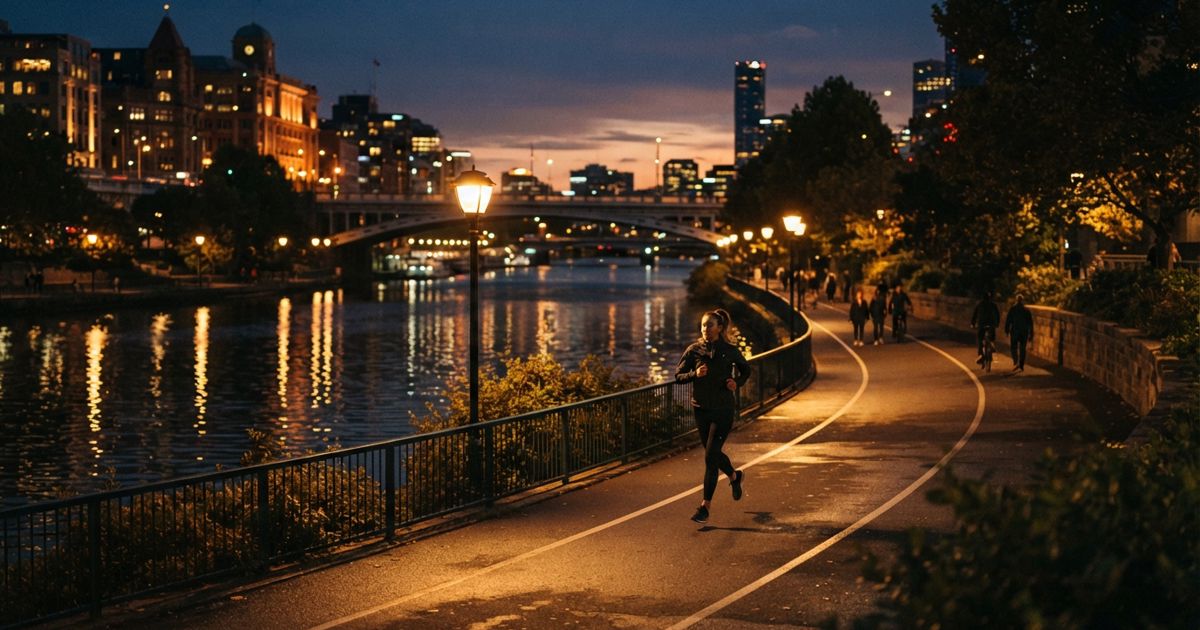
Table of contents
"Be careful" is not a safety plan. This is the concrete version — things you can actually set up once and then stop thinking about.
None of this is your responsibility in a moral sense. It is just what is useful.
Before you leave
Tell someone the route and rough time. Not "going for a run" — the route. A shared calendar entry, a message, whatever fits. The point is that someone can say where to look.
Turn on live location sharing. Both major phone platforms have it built in and it can be set to expire automatically. Most running apps also have a live-tracking link you can send. Set it up once so it is not a decision you have to make when you are already late and rushing.
Set up your phone's emergency features. Emergency SOS via the side button, medical ID on the lock screen, emergency contacts. It takes five minutes and works when you cannot unlock the screen.
Charge the phone. Obvious, routinely ignored.
Route rules
- Vary your times more than your routes. Predictability is the thing worth breaking, and a known route has real safety value — you know where the lights are, where it is overlooked, and where you would go for help.
- Prefer routes with exits. A loop that touches a main road every kilometre is safer than a beautiful out-and-back through somewhere isolated.
- Know where the open places are. Petrol stations, pubs, shops. Somewhere with people and lights that is open at the hour you run.
- Be careful with headphone-out-and-back trails at either end of the day — the isolated middle section is where you have fewest options.
Audio
You do not have to run in silence. But run with awareness.
Bone-conduction headphones leave your ears open entirely. Failing that, use one earbud, or transparency mode. The point is hearing a bike, a car, or someone approaching — most of the value here is ordinary traffic safety rather than anything sinister.
Visibility
In low light, drivers are the main risk you can actually reduce.
Reflective material on moving parts — ankles, wrists — is far more visible than a static strip on your back, because the movement is what catches attention. A light on the front matters too if there is any chance of unlit paths.
Dark technical kit is close to invisible at dusk. This is worth more than most people give it.
If something feels off
Trust it early, before you have talked yourself out of it. The cost of being wrong is a slightly odd moment; the cost of ignoring it is not symmetrical.
- Cross the road, turn around, or change pace. Do it early and obviously.
- Head towards people and light, not towards home if home is the quieter direction.
- Make a call, or look like you are on one, and say where you are out loud.
- Go into somewhere open. A shop, a pub, a petrol station. Nobody there will mind.
The bit worth repeating
Almost none of this is about dramatic scenarios. Most of the actual value in this list is in the boring parts — a charged phone, a route someone knows about, and being visible to a driver at dusk.
Set the phone settings up once. The rest becomes habit within a couple of weeks.
Where this fits
If you are just starting, the eight-week plan covers the training side.