Your first Spartan Race as a runner: Sprint vs Super vs Beast and how to train for obstacles
Distances and obstacle counts for each format, which heat to pick, how the 30-burpee penalty works, what to wear, and an eight-week plan for grip, carries and hills.
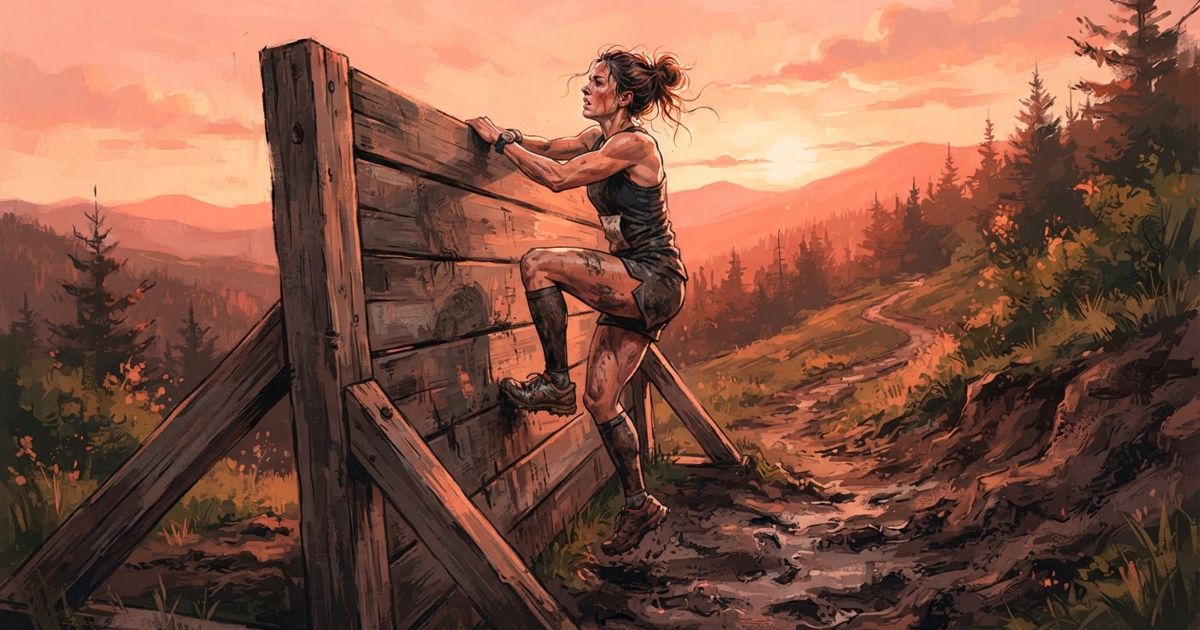
Table of contents
A Spartan Race is a trail run with obstacles in it: walls, rope climbs, monkey bars, heavy carries and a spear throw spread across a hilly course. If you can already run 5–10K comfortably, the running is not what will stop you. Grip, carrying things uphill and the burpee penalty are.
Here is how the formats differ, which heat to pick for your first one, and an eight-week plan that turns a runner into someone who finishes with dignity.
The formats: Sprint, Super, Beast and the rest
Spartan publishes a fixed distance and obstacle count for each format. Sprint, Super and Beast together make up the Trifecta — finish all three to earn it.
| Format | Distance | Obstacles | Who it suits |
|---|---|---|---|
| Stadion | 5K | 20 | Stadium course, stairs instead of mountains |
| Sprint | 5K | 20 | First race for most runners |
| Super | 10K | 25 | Comfortable 10K runners with some strength base |
| Beast | Half marathon (21K) | 30 | Experienced racers; long climbs and descents |
| Ultra | 50K | 60 | Ultra runners who already know OCR |
| City | 3–5K, mostly paved | 20 | Open heats only, not valid for the Trifecta |
| Spartan Trail | 10K, 21K or 50K | None | A trail race without obstacles |
Distances are not road distances. Spartan courses are built on ski hills and rough ground, so a 5K Sprint routinely takes a first-timer an hour or more. Budget time on feet, not your parkrun pace.
Start with the Sprint. Even if 10K is easy for you on the road, 20 obstacles over 5K is a different kind of hard. You will learn how your grip and lungs cope with going from a wall straight into a hill climb, and you will learn it over a distance where a mistake costs you twenty minutes, not two hours.
Heats: Open, Age Group or Elite
When you register you pick a heat type. Spartan describes three:
- Elite — earliest start times, official referees, prize money. Not for a first race.
- Age Group — competitive racing across ten age categories, with podiums in each group. Same obstacle standards as Elite.
- Open — for casual racers, teams and newcomers. Not ranked; starts in time blocks through the day.
Pick Open for your first race. It is the heat where you can race with a friend, wait for each other, and accept a boost over a wall. In the competitive heats outside assistance is not allowed, and Spartan's help centre warns that racers who accept aid such as food or drink can be disqualified.
Age limits (Spartan US, per its help centre): Sprint and Super Open heats are 14+, competitive categories 16+. Beast Open is 16+, competitive 18+. Ultra and endurance events are 18+ for everyone. You must meet the age on race day — no exceptions.
The burpee penalty, explained
Some obstacles are pass/fail. If you genuinely attempt one and cannot complete it, you take a penalty. Spartan's own wording strongly discourages skipping obstacles without trying.
- Open heats: 30 burpees at a standard obstacle race, 15 at a Stadion.
- Elite and Age Group: a penalty loop instead of burpees (15 burpees at a Stadion).
Thirty burpees is the reason runners struggle in their first Spartan. Three failed obstacles is 90 burpees, which on tired legs can take longer than the running between them. The cheapest way to get faster is to fail fewer obstacles — that is what the training below is for.
The obstacles most runners fail: the spear throw (pure technique), the multi-rig and monkey bars (grip), and the rope climb (technique more than strength). Carries such as the bucket and sandbag rarely stop you outright, but they wreck your legs for the next section.
What to wear
Spartan's race-day checklist is short and sensible:
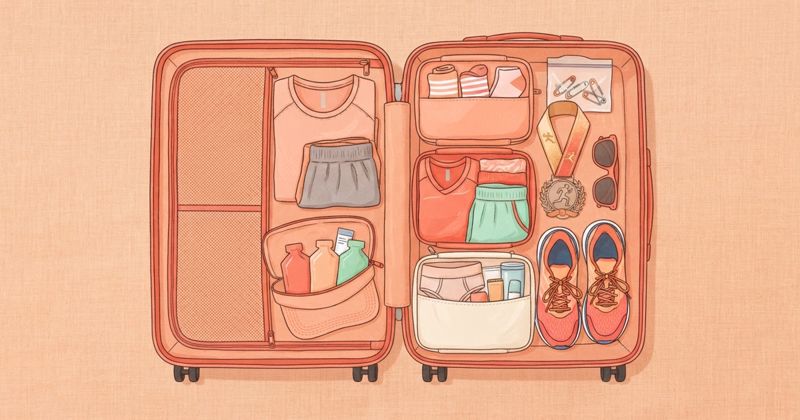
- A quick-drying top, shorts and underwear. No cotton — you will go from dry to soaked to muddy and back several times.
- Thin, breathable socks. Again, no cotton. For a Beast, a spare pair and some foot lubricant.
- Shoes with drainage and traction. Your road shoes will slide on wet grass and mud. A trail shoe with proper lugs that drains water is what you want, and you should have run in it before race day.
- Leave sunglasses and a hat in your bag. They frequently do not survive the course.
- For Super and Beast distances, carry your own hydration — a soft flask or a light vest — and stash fuel in it.
Pack a full change of clothes, a towel, flip-flops, your ID and a big plastic bag for the muddy kit. A sports bra with a secure closure matters more than usual here: you will be hanging, crawling and climbing in it.
An 8-week runner-to-OCR plan
This plan assumes you already run three times a week and can cover 5K without stopping. It keeps your running roughly where it is and adds the three things runners lack: grip, carries and hills. Two strength sessions a week of about 30–40 minutes, plus one of your runs becomes a hill session.
| Week | Run focus | Grip | Carries & strength | Obstacle skills |
|---|---|---|---|---|
| 1 | 3 easy runs | Dead hangs, 4 × max hold | Farmer carries 4 × 40 m; goblet squats | Learn the burpee standard: 3 × 10 |
| 2 | Add hill repeats: 6 × 60 s up | Hangs, 5 × max | Farmer carries heavier; step-ups | Burpees 3 × 12 |
| 3 | Hills 8 × 60 s | Scapular pulls + hangs | Bear-hug sandbag or backpack carry 4 × 50 m | Practise a rope climb foot lock (on a rope or with a towel over a bar) |
| 4 | Easy week: 3 easy runs | Hangs only | Lighter carries | 30 burpees for time, once |
| 5 | Hill run with walking power-hikes | Towel hangs (thick grip) | Uphill carries if you have a slope | Monkey bars or alternating hang-and-shift on a bar |
| 6 | One run with stops every 1 km for 10 burpees | Towel hangs, longer | Sandbag over shoulder, walk-run intervals | Spear or javelin-style throw practice if you can find a target |
| 7 | Hardest week: race simulation, 5–6 km with stations | Hangs at end of session, tired | Carry + run combos | 2 × 30 burpees inside a run |
| 8 | Taper: 2 short easy runs | Light hangs | None in the last 4 days | Rest |
Why these three. Grip is the limiter on rigs, bars and ropes, and it fatigues fast when you are already breathing hard — which is why the plan has you hanging at the end of sessions in weeks 6–7. Carries load your legs and trunk in a way running does not. Hills matter because Spartan builds courses on climbs, and the carries are often uphill.
Keep your easy runs easy. Adding strength work on top of your running only works if the running is not also hard. If your legs are flat for every session, drop a strength set before you drop a run. If you have no strength routine yet, our runner's strength basics are the foundation the plan builds on.
See the 20-minute strength routine
Practise burpees properly. Spartan's standard is chest to the ground, then a jump with hands overhead. Doing them correctly in training means you will not be stopped by a volunteer or referee on the day.
If you have a joint injury, are returning postpartum, or have not done any upper-body strength work in years, progress slower than the table and check with a physio before loading carries and hangs.
Before you book: race locations and the link below
Spartan runs events in dozens of countries, but the booking link at the end of this article is for Spartan races in the United States and Canada only. If you are elsewhere, book through your own country's Spartan site.
If you are planning a full season, place your Sprint where it fits around your road races rather than in the middle of a marathon block.
FAQ
Can I walk a Spartan Sprint?
Yes. Plenty of Open heat racers walk the climbs, and power-hiking steep sections is often faster than running them anyway. There is a course time limit at each event, so check the event page.
Do I have to do burpees in the Open heat?
If you attempt a pass/fail obstacle and cannot complete it, yes: 30 burpees at a standard race, 15 at a Stadion. Competitive heats take a penalty loop instead.
Sprint or Super for my first race if I already run 10K?
Still the Sprint. The 20 obstacles and the terrain make it a full test. Move to the Super once you know how you handle the obstacles.
What shoes should I wear?
Trail shoes with real lugs and good drainage, broken in beforehand. Road shoes slip on wet grass and mud, and waterlogged heavy shoes make the second half miserable.
Can I race with a friend?
Yes — register in the same Open heat. Helping each other over walls is normal in Open; it is not allowed in Elite or Age Group.
Is there a minimum age?
In the US, 14 for Sprint and Super Open heats, 16 for Beast Open, 18 for the Ultra. Competitive categories are older.
Sources and further reading
Sources
- Spartan Race — Obstacle course race formats (distance and obstacle counts) ca.spartan.com
- Spartan Race help centre — Spartan race types spartanrace.zendesk.com
- Spartan Race help centre — Can I skip an obstacle? Is there a penalty? spartanrace.zendesk.com
- Spartan Race help centre — Age limits spartanrace.zendesk.com
- Spartan — Competitive racing (Elite, Age Group, Open) kr.spartan.com
- Spartan — The Spartan race-day checklist spartan.com