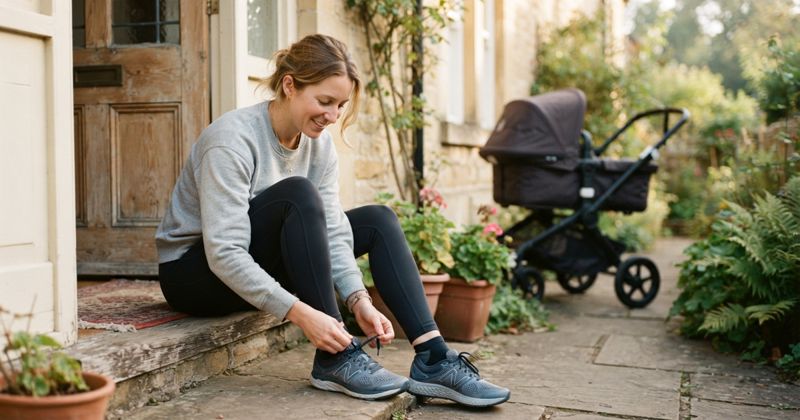
Your first 10K: turning 5K fitness into double the distance
One long run a week, everything else easy, and eight weeks. How to turn a comfortable 5K into a first 10K without the mileage jump that gets people hurt.

Table of contents
Going from 5K to 10K is one of the easier jumps in running, provided you resist the obvious mistake: trying to run the whole distance hard, immediately.
Before you start
You should be able to run 5K continuously, at an easy conversational effort, without it being an ordeal. If 5K is still a hard maximum effort, spend three or four weeks just running it comfortably first. Doubling distance from a base you can barely hold is how people end up injured in week four.
The structure
Three runs a week:
- One long run, extended gradually. This is the session that matters.
- Two easy runs of 25–35 minutes, at genuinely easy effort.
That is the whole plan. There is no speed work, because at this stage distance is the adaptation you want and adding intensity on top of increasing volume is the classic way to get hurt.
Eight weeks
| Week | Long run | Other two runs |
|---|---|---|
| 1 | 5 km | 25 min easy |
| 2 | 6 km | 25 min easy |
| 3 | 7 km | 30 min easy |
| 4 | 5 km (cutback) | 25 min easy |
| 5 | 8 km | 30 min easy |
| 6 | 9 km | 30 min easy |
| 7 | 6 km (cutback) | 25 min easy |
| 8 | 10 km | 25 min easy |
The cutback weeks are not optional. Adaptation happens during recovery, and a reduced week every third or fourth week is what lets the previous block land. People who delete them because they feel fine are the people who feel considerably less fine in week six.
Pace
The long run should be slower than your 5K pace. Meaningfully slower. If you can hold a conversation, you have it right — the case for running easy is here.
Your first 10K will likely be somewhere around a minute per kilometre slower than your 5K pace, and that is completely normal.
Fuelling
At 10K, for most people, you still do not need to eat during the run — you will be under the 90-minute mark where that starts to matter. What does change is that a long run on a genuinely empty stomach starts to bite. The fuelling guide covers the thresholds.
Carry water on the longer runs if it is warm, or plan a route past a fountain.
Kit that starts to matter
Two things that were tolerable at 5K become noticeable at 10K:
- Chafing. Longer time on feet, more repetitions. Anti-chafe balm, and check seams.
- Shoes with enough room at the front. Toenail problems show up at this distance, not at 5K — the fit guide covers why half a size up matters.
And if your long runs are pushing into early mornings or evenings, the solo running checklist is worth five minutes.
Race day, if you enter one
Start slower than feels right. The first two kilometres of a first 10K feel effortless and it is a trap — almost everyone goes out too fast and pays for it after 7km. Aim to run the second half no slower than the first.